Live Review: Helloween – A Night to Remember at the Budokan (September 16th, 2023)
From selling merchandise outside the Nippon Budokan in the morning to watching Helloween conquer the legendary venue that evening, September 16, 2023 became one of those concerts where music, memory and place came together perfectly. With Kiske, Hansen and Deris sharing the stage, the German legends travelled from Walls of Jericho to their modern era in front of a completely devoted Japanese audience.
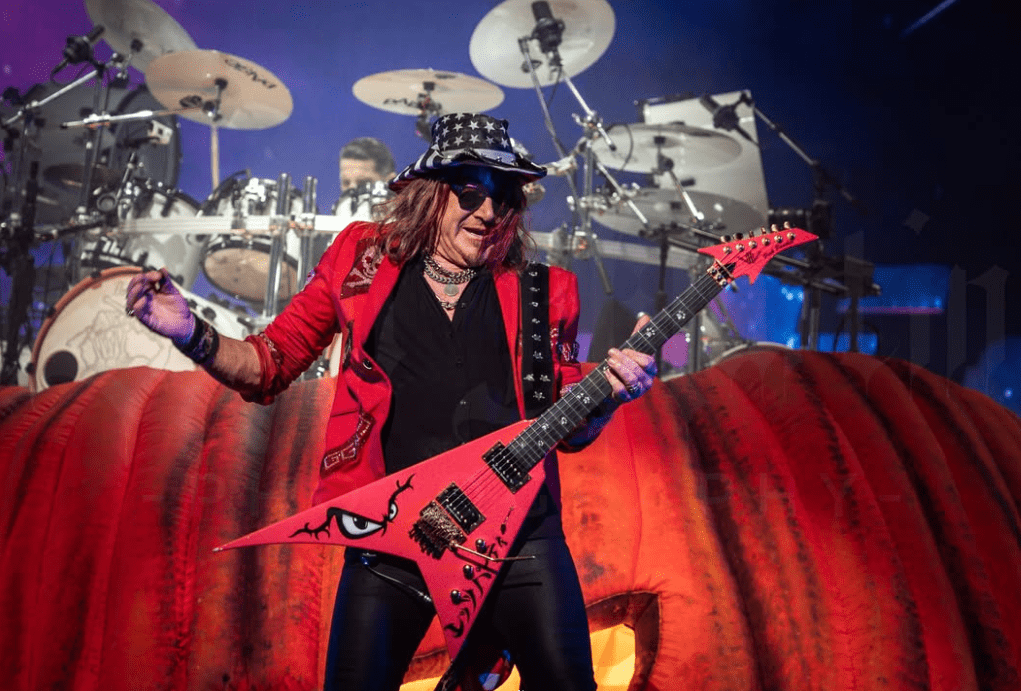
There are certain names that acquire a meaning far beyond the place they represent. The Nippon Budokan is one of them. For anybody who has spent enough years listening to live albums, watching concert footage or simply following the history of rock and heavy metal, the word Budokan immediately evokes images of legendary performances and artists who turned their Japanese shows into something much greater than another date on a tour. It was therefore difficult not to feel that we were about to experience something special when Helloween announced their first ever concert at the legendary Tokyo venue on September 16, 2023, as part of the United Forces tour. The fact that I had already spent the morning in the area selling merchandise made the whole thing even more surreal, because I had been looking at the building only a few hours earlier without knowing quite how different it would feel when I returned that evening as a member of the audience.
The Budokan has always carried that almost mythical status among music fans, particularly because of the recordings that have helped establish its reputation outside Japan. I could not stop thinking about artists such as Cheap Trick, whose Cheap Trick at Budokan became one of the most celebrated live albums of the seventies, or Michael Schenker and his own connection with the venue. There is something strangely powerful about standing in a place that you have previously experienced through photographs, album covers and recordings rather than through your own eyes, and that feeling became even stronger when we returned later in the day and found the building completely packed. Helloween had finally arrived at the Budokan, and judging by the atmosphere inside, the Japanese audience had been waiting for precisely this moment.
The circumstances surrounding the concert made the occasion particularly meaningful for me because Helloween had been one of those bands that had accompanied me for a huge part of my life. I had discovered Walls of Jericho and the two Keeper of the Seven Keys albums many years earlier, and those records had played an important role in shaping my taste in heavy metal. The reunion with Michael Kiske and Kai Hansen had therefore been something I had followed with considerable interest, particularly because it brought together musicians representing very different stages of the band’s history. Seeing Michael Weikath, Markus Grosskopf, Kai Hansen, Michael Kiske, Andi Deris, Sascha Gerstner and Dani Löble sharing the same stage was already something special, but seeing all seven of them inside the Nippon Budokan gave the whole thing a completely different dimension.
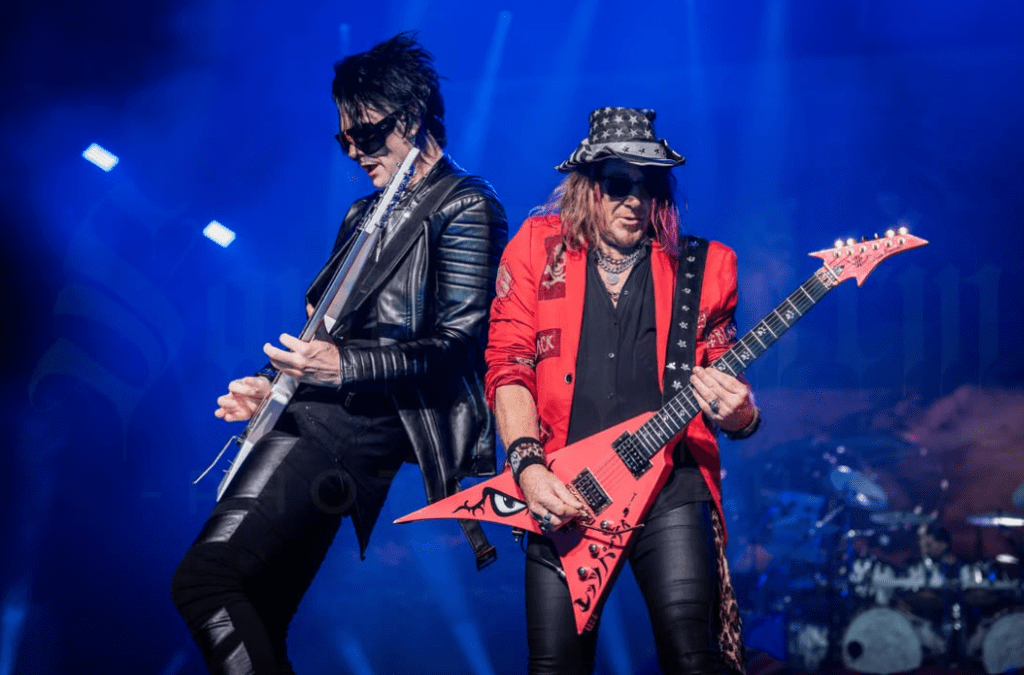
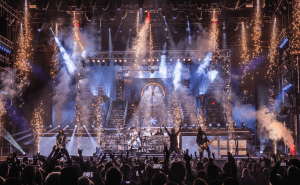
There was no need for an elaborate introduction once the lights went down. Orbit came through the speakers and the enormous figure of Helloween began to take shape on stage, before the band launched into Skyfall, the epic opening track from their 2021 self-titled album. It was a very appropriate choice because the song immediately demonstrated what this incarnation of the band had become: three guitars, two main vocalists and Kai Hansen available to step forward whenever the repertoire required it. The performance also made it clear that this was not simply a nostalgia exercise built around the return of Kiske and Hansen, but a genuine seven-piece version of Helloween capable of presenting its entire history as a coherent whole.
That became even more obvious when Michael Kiske took the lead on Eagle Fly Free. There are certain songs that become so closely associated with a particular singer that it is difficult to imagine anybody else performing them, and this is undoubtedly one of those cases. Hearing Kiske sing it inside the Budokan was one of the moments when the significance of the evening really began to sink in, particularly because the audience knew exactly what was happening and responded accordingly. The Japanese fans were completely committed throughout the concert, singing along, reacting to the musicians and creating the sort of atmosphere that makes a band feel genuinely connected to the people standing in front of them rather than simply performing to an anonymous crowd.
The setlist itself was very carefully constructed to make that connection possible, alternating material from the reunited band’s 2021 album with songs from the different stages of its career. Andi Deris took centre stage for Mass Pollution and Power, while Kiske returned for Future World and Save Us, creating a constant exchange between the different eras of the band. The three-guitar lineup could easily have become excessive, particularly in a venue where the scale of the stage and the size of the audience already provided plenty of spectacle, but instead it gave the classic songs an enormous amount of depth while allowing the newer material to sound perfectly at home alongside them. The setlist would eventually become the basis for Live at Budokan, with the complete performance being recorded and filmed that evening.
For me, however, the most emotional part of the evening was inevitably connected with Kai Hansen and the early years of the band. When the stage moved towards Walls of Jericho and the opening of the Kai medley appeared, it was impossible not to think about that old cassette, about discovering those songs when I was much younger and about how strange it was to hear them being performed in Tokyo almost four decades after they had first been written. Metal Invaders, Victim of Fate, Gorgar and Ride the Sky were compressed into a medley that represented the rawest and most primitive side of Helloween, before Kai continued with Heavy Metal (Is the Law). The official recording preserves this entire sequence as one of the defining sections of the Budokan performance, and it is easy to understand why.
There was something particularly appropriate about hearing Heavy Metal (Is the Law) in that building. The young Helloween had written that song as an almost absolute declaration of faith in the music they were creating, and here it was being performed decades later by musicians who had helped shape the European metal scene themselves. The contrast between the simplicity of that original message and the magnitude of the surroundings was almost poetic. A song written by a group of young German musicians who were still fighting to establish themselves was now being played in one of the most famous concert halls in Japan by a band whose history had already become part of heavy metal itself.
The concert then moved naturally into Forever and One (Neverland), with Kiske and Deris sharing the vocals, before Sascha Gerstner was given his own moment with a guitar solo. The newer material returned with Best Time, which brought Deris, Kiske and Hansen together, and this was perhaps the best demonstration of what made this particular incarnation so interesting. Instead of trying to determine which singer represented the «real» Helloween, the concert simply allowed each of them to occupy the part of the band’s history that suited them best. Deris had his own songs, Kiske had his classics and Hansen could return to the material from the band’s earliest years, while Weikath, Gerstner, Grosskopf and Löble provided the backbone that made the whole arrangement work.
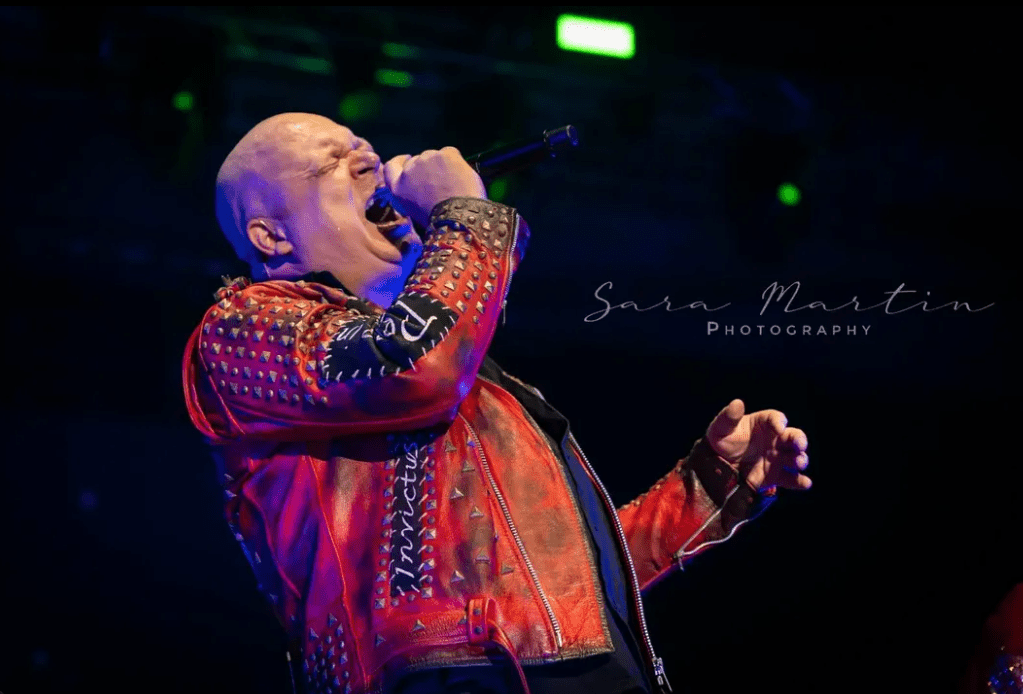
By this point, the distinction between past and present had practically disappeared. Dr. Stein brought another dose of the classic era, while How Many Tears connected the concert directly with Walls of Jericho and the earliest days of the band. It was an especially satisfying choice because the song had already been one of the great highlights of that debut and because hearing it in the Budokan, with Kiske and Deris sharing the vocal duties, turned it into something much more than a simple trip down memory lane. The entire concert had been building towards this point without ever becoming predictable, and the seven musicians had demonstrated that the reunited lineup could make the band’s history feel like one continuous story rather than a collection of disconnected periods.
The first encore began with Perfect Gentleman, giving Andi Deris another opportunity to take the spotlight, before the enormous Keeper of the Seven Keys brought the evening into its final stage. For somebody who grew up with those records, it was impossible not to feel overwhelmed by the circumstances. The song itself had always possessed a grandiosity that demanded to be heard at considerable volume, but there was something almost excessive about hearing it inside the Budokan with the entire audience completely absorbed in the performance. Kiske and Deris sharing the song worked particularly well because it avoided turning the performance into a recreation of 1987 and instead transformed it into a celebration of everything the band had become since then.
After Dani Löble‘s drum solo, the band returned for I Want Out, which was probably the only possible way to close the evening. The song has become one of the defining anthems of Helloween, and in a room full of Japanese fans who had spent the previous two hours travelling through the band’s entire history, its final chorus felt almost inevitable. By then the distinction between musicians and audience had practically disappeared, with the Budokan functioning as one enormous voice. The concert had lasted a little over two hours, and its complete performance would later be released as Live at Budokan, turning that September evening into a permanent document of the reunited lineup.
When I think about that concert now, though, what comes back to me is not only the music. It is the whole day. It is the memory of being outside the Budokan in the morning, selling merchandise and looking at a building that I had previously known only through the history of other musicians, and then returning later with the crowds already gathering around it. It is the sensation of walking inside and finding the place completely full, looking around the stands and realising that thousands of people had come together for exactly the same reason. It is remembering that this was the same building in which Cheap Trick had created one of the most famous live records of the seventies, the same place associated with Michael Schenker and so many other artists, and now Helloween were about to add their own chapter to that history.
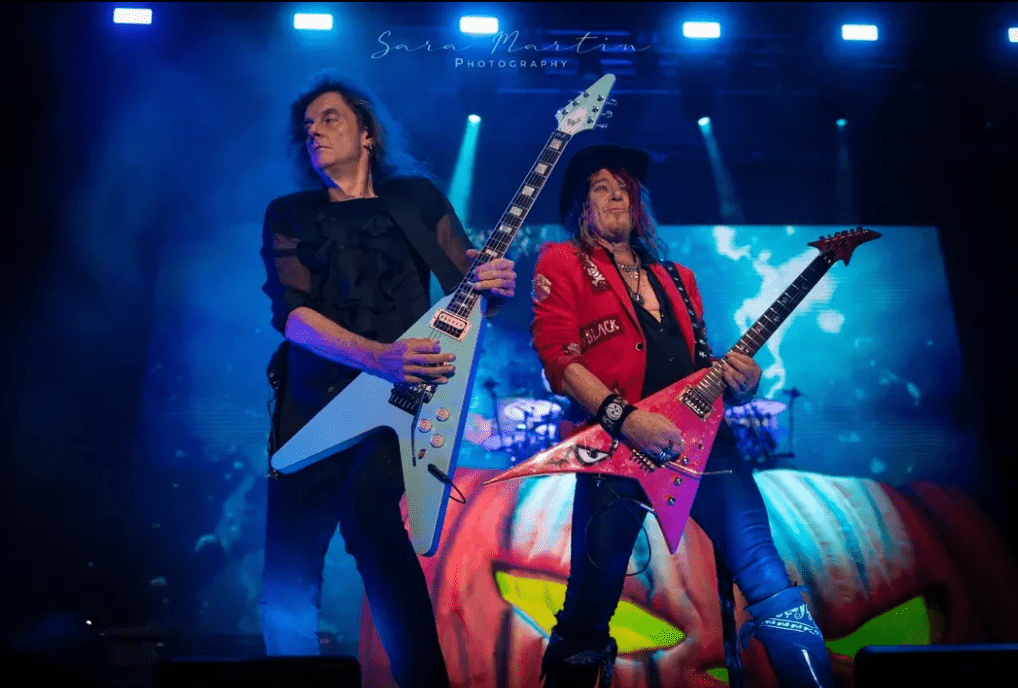
There is also something particularly strange about experiencing such a concert in Japan when the band itself comes from so far away. Helloween were born in Hamburg, but by the time we reached Tokyo their music had travelled across four decades and several continents, becoming something that belonged to audiences all over the world. Japanese fans have always had a particularly strong relationship with European heavy metal, and the reaction inside the Budokan demonstrated just how deeply Helloween had become embedded in that culture. The audience did not merely applaud between songs; they were actively participating in the performance, and that constant exchange between the stage and the stands was one of the reasons the concert felt so complete.
Looking back at the setlist also reveals just how intelligently the evening had been constructed. Helloween did not attempt to represent every album equally, nor did they simply reproduce the most predictable songs from the first two Keeper records. Instead, the band used the seven-piece lineup to move through different generations of their music, with Skyfall, Mass Pollution and Best Time demonstrating that the reunited formation was not simply looking backwards, while Eagle Fly Free, Future World, Save Us, Dr. Stein, Keeper of the Seven Keys and I Want Out provided the songs that had become inseparable from the band’s legacy. The Kai Hansen medley then acted almost like a historical document within the concert itself, compressing the early years into a single sequence before the show returned to the later material.
Perhaps that is why the concert has remained so vivid in my memory. There are technically better performances, larger productions and probably other Helloween shows in which one particular song was played with even greater perfection, but none of those things can reproduce the circumstances of that September evening. I had spent the morning working outside one of the most famous concert halls in the world and returned a few hours later to watch one of the bands that had accompanied me since childhood. I was surrounded by a completely devoted Japanese audience, inside a building whose history had already been immortalised on countless records, watching seven musicians representing practically the entire history of Helloween perform together for the first time at the Budokan.
That combination is impossible to manufacture. The venue, the band, the repertoire, the audience and the personal memories all happened to converge on the same evening, and that is what makes the concert so difficult to separate from the experience of being in Japan itself. When the final notes of I Want Out disappeared and the lights came back on, I knew that I had just witnessed one of those concerts that would remain with me for a very long time. The fact that the show was subsequently released as Live at Budokan only reinforces that feeling, because it means that the evening is no longer just a memory shared by those of us who were there. It has become part of the band’s recorded history as well.
I have no doubt that I will see Helloween again, and I hope there will be many more opportunities to hear these songs live, whether they come from Walls of Jericho, the Keeper albums, the Andi Deris era or the band’s more recent material. There may even be another show somewhere in the future that surpasses the Budokan performance in one way or another. But there is only one first time, and there is only one occasion on which you can walk into the Nippon Budokan knowing that you are about to see Helloween make their debut at one of the most iconic venues in music history.
For somebody who has spent so many years with these songs, that was more than enough to make September 16, 2023 a night worth remembering.