Song Of The Day: «Betrayer» by Kreator
Few songs capture the fury of late-eighties German thrash metal like Betrayer. With Kreator turning the betrayal of Socrates into a relentless assault of razor-sharp riffs and Teutonic aggression, Extreme Aggression produced a timeless anthem that still sounds dangerous more than three decades later.
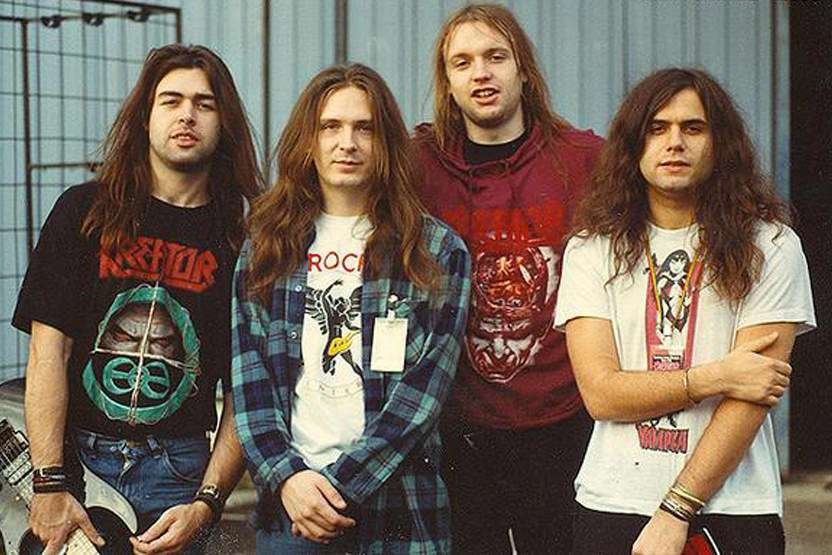
There are songs that represent an album, songs that represent a band and then there are songs that seem to represent an entire genre. Betrayer belongs firmly to the third category. Released in 1989 as part of Kreator‘s monumental Extreme Aggression, it is one of those tracks that requires barely a few seconds to remind us why German thrash metal became such a terrifying proposition during the second half of the eighties. The guitars are vicious, the drums sound as though they are trying to demolish the studio and Mille Petrozza delivers his vocals with the sort of fury that makes the distinction between singing and screaming completely irrelevant. This is not music asking for permission to enter your living room. It kicks the door down.
What makes Betrayer particularly effective, however, is that its violence is not simply a matter of speed. Kreator had already demonstrated on Pleasure to Kill and Terrible Certainty that they could make thrash metal sound absolutely unhinged, but by the time Extreme Aggression arrived, the band had developed a much more controlled sense of songwriting. Petrozza, Frank “Blackfire” Gosdzik, Rob Fioretti and Ventor were no longer simply trying to play faster than everybody else. They understood that the most devastating riff is not necessarily the fastest one, but the one that arrives with precisely the right amount of weight behind it. Betrayer is therefore an excellent example of the point where raw Teutonic aggression began to acquire the precision that would define Kreator for decades to come.
There is something almost ancient about the song’s sense of violence, and that is particularly appropriate given its subject matter. The lyrics draw upon the betrayal and execution of Socrates, transforming an episode from classical Athens into a furious piece of thrash-metal condemnation. The song’s video famously took Kreator to Greece, where the band performed among the ruins of the Acropolis, producing one of the most memorable visual documents of late-eighties thrash metal. It is an almost absurdly perfect combination: four Germans in denim and leather standing among some of the foundations of Western civilisation while playing one of the most aggressive songs ever written about betrayal, corruption and fanaticism. If heavy metal ever needed an archaeological site to prove that it belonged there, this was probably it.
The connection with ancient Greece also gives Betrayer an unusual quality within Kreator‘s catalogue. Much of the band’s lyrical universe has traditionally been populated by war, death, religion, violence and social collapse, but here the historical setting gives those subjects an almost timeless dimension. The story may belong to Athens, but the anger does not. Betrayal, ideological persecution and the willingness of societies to destroy those who refuse to conform are hardly exclusive to antiquity. Kreator simply found an appropriately dramatic setting in which to deliver the message.
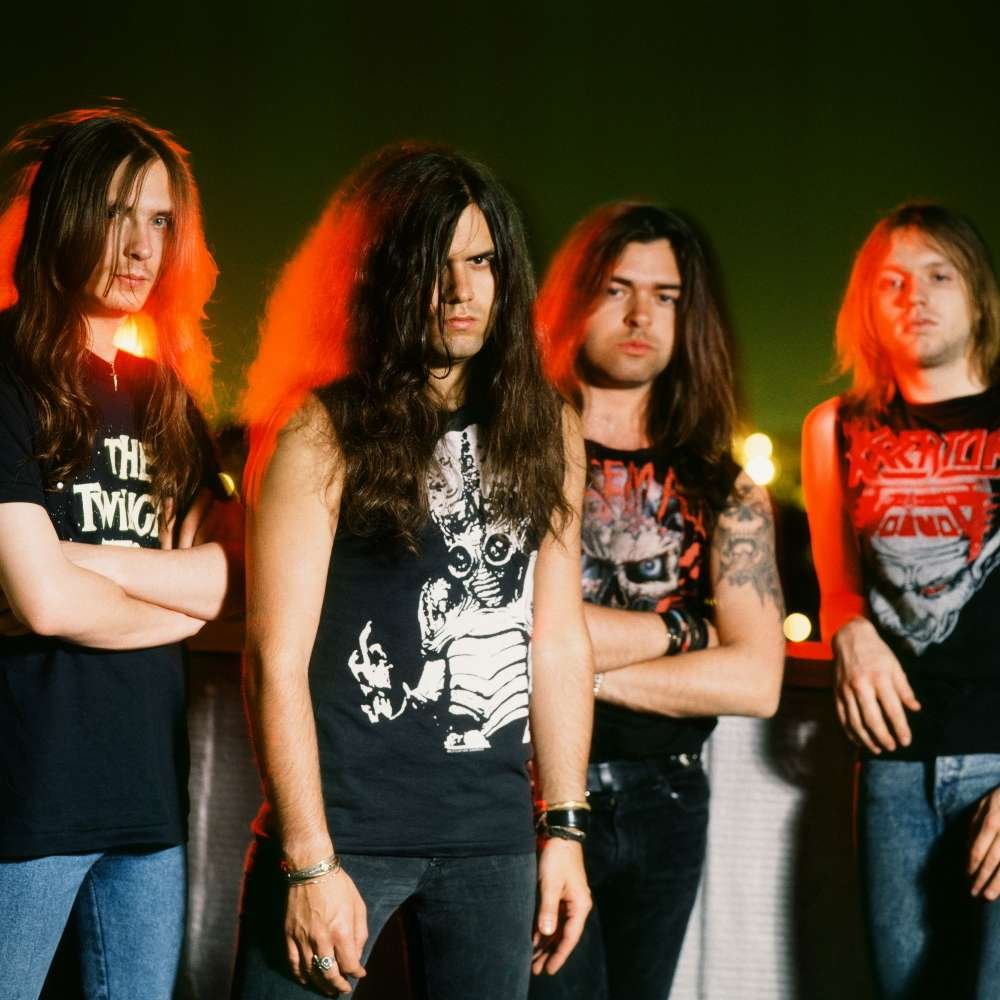
Musically, Betrayer is almost ridiculously economical. The opening riff does not need an elaborate introduction because the song’s identity is established immediately, with Blackfire‘s guitar work providing the sharp edge while Petrozza reinforces the attack with a second guitar presence that gives the composition considerably more depth than its apparent simplicity suggests. Then comes Ventor, whose drumming gives the entire track its sense of imminent collapse. There is a remarkable amount of movement packed into those few minutes, but nothing feels ornamental. Every change serves the momentum of the song.
And that is perhaps why Betrayer has survived so well. Thrash metal has always been vulnerable to the passage of time because speed alone eventually becomes familiar. What sounded impossibly fast in 1985 can sound merely energetic decades later. What survives is the riff, the attitude and the ability to create tension. Betrayer possesses all three. It can be played loudly in 1989, 2009 or 2026 and still sound like somebody has just lit the fuse.
There is also a certain irony in the fact that the song’s historical subject and its musical form fit together so naturally. Socrates was condemned for challenging the accepted beliefs of his society, and Kreator were themselves operating in a musical environment where aggression, provocation and refusal to conform were essential parts of the underground metal mentality. The song therefore works on two levels. It is a story about an ancient philosopher, but it is also a product of a scene that had made rebellion one of its central virtues. The connection is never forced. It is simply there, buried beneath the riffs.
The guitars are ultimately what make the whole thing work. There is a beautiful ugliness to the tone, particularly when the riffs begin to overlap and the song accelerates towards its more chaotic passages. Kreator were never interested in making thrash metal sound comfortable, but Betrayer demonstrates that brutality does not have to sacrifice melody. There are guitar lines here that are surprisingly memorable, and the song’s central riff is precisely the sort of piece of musical DNA that remains in your head long after the final note has disappeared.
That is why I keep coming back to the word economical. There is no wasted space here. The song does what it needs to do and then gets out of the way before the listener has time to become accustomed to the assault. It is the musical equivalent of a short, violent argument in a dark alley: you arrive, something happens very quickly, and suddenly you are left wondering what the hell just hit you.
Of course, Extreme Aggression contains several other defining moments in Kreator‘s career, but Betrayer occupies a particularly important position because it demonstrates how far the band had travelled since their earliest recordings without losing the hostility that made them special. The production is clearer, the songwriting more sophisticated and the performances more disciplined, but the spirit remains unmistakably vicious. Kreator had learned how to sharpen the blade without taking away the rust.
There is also something wonderfully theatrical about the whole package. The title, the historical subject, the Greek setting and the relentless music combine into something almost larger than the song itself. Yet it never becomes pretentious because Kreator keep dragging everything back to the riff. They may be standing beneath the ruins of ancient civilisation, but they are still there to play thrash metal. And they play it with the kind of conviction that makes the surroundings feel almost inevitable.
Perhaps that is the secret behind the longevity of Betrayer. It does not sound like a historical artefact, despite being so deeply rooted in a particular moment. Instead, it sounds like the distilled essence of what made that moment so exciting. The late eighties were coming to an end, thrash metal was reaching its commercial and artistic peak and bands like Kreator were proving that extreme music could be both brutally aggressive and genuinely memorable. Betrayer captured that contradiction perfectly. More than three decades later, the song still has teeth.
And perhaps that is exactly what a great thrash-metal song should have. Not nostalgia, not reverence and certainly not the feeling that you are listening to something safely locked inside a museum. Betrayer should feel dangerous. It should make you want to turn the volume up, clench your fists and wonder how four musicians managed to make a story about an ancient Greek philosopher sound like an impending riot. The ruins of Athens may be thousands of years old, but Kreator made them sound very much alive and Betrayer is the reason why.