Journey to the End: Twenty-five years of Windir’s «1184»
With 1184, Valfar transformed the history, folklore and landscapes of Sogndal into something far beyond black metal. Two decades later, Windir’s masterpiece still sounds like a voice emerging from the mountains, carrying stories that refuse to disappear.
JOURNEY TO THE END: TWENTY-FIVE YEARS OF WINDIR’S 1184
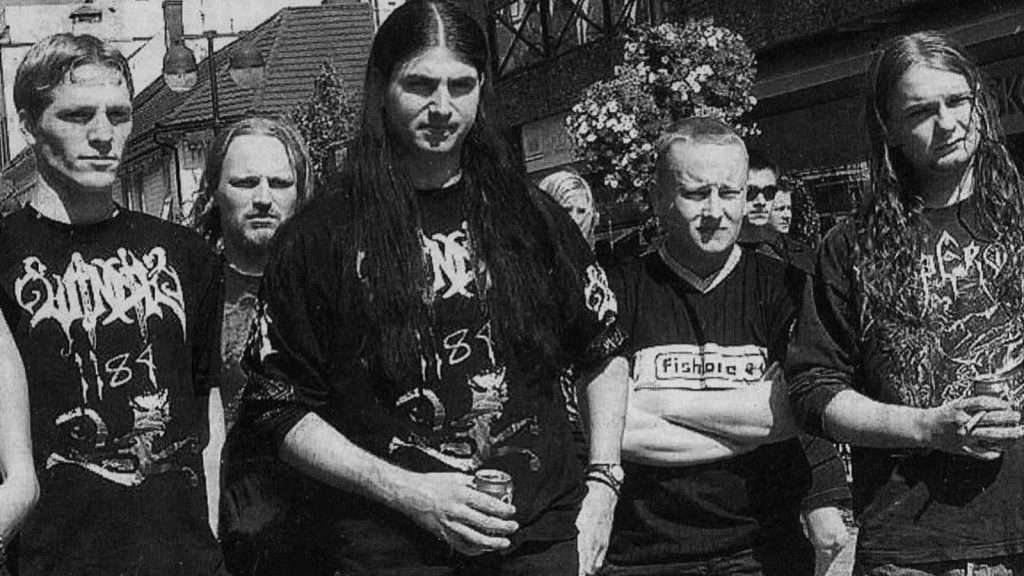
Some albums seem to belong to a particular place. You can hear the geography in them, not simply because the musicians happen to come from somewhere, but because the landscape, history and traditions of that place have become part of the music itself. Windir’s 1184 is one of those records. Released in 2001, it is an album that seems almost impossible to separate from Sogndal and the surrounding Sognefjord region, from the mountains and winter landscapes of Western Norway, and from the stories that had survived there for centuries. By this point Terje “Valfar” Bakken had already spent years developing Windir as a deeply personal project, releasing Sóknardalr in 1997 and Arntor in 1999, but 1184 represented an important transformation. The musicians of Ulcus, with whom Valfar was already closely connected, became permanent members of Windir, turning what had essentially been a one-man project supported by session musicians into a proper band. Valfar remained firmly at the centre of the songwriting, but the expanded lineup gave Windir a different physicality, allowing the music to become heavier, more immediate and more adventurous without sacrificing the melodic and folk-infused identity he had established. The result is an album that can be described as black metal, Viking metal, folk metal or even progressive metal depending on which part of it you happen to be listening to, but none of those labels really explains what makes it special. 1184 does not sound like a band borrowing elements from several genres; it sounds like Valfar had found a way of making those apparently incompatible ingredients belong to the same world.
The title itself tells us why. 1184 was the year of the Battle of Fimreite, one of the decisive conflicts of the Norwegian civil wars, fought in the Sognefjord between the forces of King Sverre and Magnus Erlingsson. It was not some conveniently obscure Viking battle chosen because the number looked suitably ancient on an album cover. It was part of the history of the very region where Valfar lived and where Windir was born. The title track recounts the conflict in Sognamål, the local dialect, describing Sverre’s fleet, the warriors gathered at Fimreite and the death of Magnus and his men. The story also brings back Arntor, the historical figure who had already given his name to Windir’s previous album, creating a loose historical continuum between the two records. This is where the connection with the Icelandic sagas becomes particularly fascinating. In the sagas, history is rarely presented as a dry sequence of dates and political events. A valley, a farm, a family or a particular mountain can carry the memory of generations, and personal honour becomes inseparable from the landscape in which the characters live and die. Valfar approached his own regional history in much the same way. He did not need to invent an imaginary Viking kingdom somewhere in a fantasy universe because Sogndal already contained enough stories. The result is a form of historical metal that feels remarkably intimate: the battles may have happened more than eight centuries earlier, but they belong to the same mountains, the same fjords and the same land that Valfar saw around him. That is why the use of Sognamål matters so much. It is not simply another exotic element in the arrangement. It anchors the music to a real place and gives the stories a voice that could not have come from anywhere else.
Musically, 1184 begins with “Todeswalzer”, and the title is almost an invitation to misunderstand what follows. There is certainly something theatrical about the opening, with keyboards establishing a cold, ominous atmosphere before the guitars and drums tear through it, but this is not the sort of symphonic black metal where keyboards are placed on top of guitars to make everything sound grander. They are part of the architecture. The guitars remain the engine, particularly the high-register melodic lines that became one of Valfar’s most recognisable trademarks, while the keyboards and folk instruments provide another dimension underneath. There are moments when the music becomes ferocious enough to stand comfortably beside the more aggressive side of Norwegian black metal, only to turn around and reveal a melody that could have come from a completely different tradition. “1184” follows with accordion and local-language vocals embedded into an arrangement that otherwise has all the velocity and hostility of melodic black metal. “Dance of Mortal Lust” and “The Spiritlord” push the attack further, with the latter introducing a comparatively straightforward black-metal groove before opening into the kind of melodic passages that only Windir could make sound completely natural. It is worth remembering that this was released in 2001, when the second wave of Norwegian black metal had already become an international phenomenon and bands were increasingly moving in very different directions. Darkthrone were stripping their sound down, Emperor had expanded black metal into something almost symphonic and cosmic, Enslaved were pushing further into progressive territory, while Ulver had already demonstrated just how dramatically the genre’s boundaries could be stretched. Windir occupied an unusual position somewhere between those worlds. Valfar understood the aggression of black metal, but he also loved melody far too much to let it remain in the background. He could use a blast beat to propel a riff forward and then introduce an accordion line without making either element feel like a joke. That balance is the real achievement of 1184.
There is also a strong connection to Bathory, although reducing Windir to a Norwegian continuation of Quorthon’s Viking-metal vision would miss the most interesting part of the story. Bathory had transformed Scandinavian history and mythology into something monumental, creating music that seemed to look backwards towards an imagined heroic age. Valfar took a similar fascination with the past but brought it much closer to home. His mythology was not simply about Odin, Thor, Valhalla and a generic warrior culture. Those elements certainly exist in the broader world surrounding Windir, but they are constantly being pulled back towards human history: battles, betrayal, family, land and death. In that respect, Windir are closer to the sagas than to fantasy. There is certainly a Tolkien-like temptation to imagine 1184 as the soundtrack to some enormous medieval quest, but the album actually works better when we resist that impulse. This is not Middle-earth. It is Sogndal. The difference is important. The mountains are real, the fjord is real and Fimreite is real. That reality gives the album a weight that even the most convincing fantasy world cannot quite reproduce. It is also why the cover feels so important: the landscape is not an illustration placed behind the music but almost an extension of it. The cold water, mountains and winter atmosphere create the impression that the songs have been pulled out of the landscape itself rather than composed in a rehearsal room.
And there is something deeply cinematic about that landscape. If 1184 were ever adapted into a film, the obvious temptation would be to imagine huge battle scenes, longships cutting through the fjords and warriors charging towards one another beneath a stormy sky. But that would probably miss the point. The cinema I hear in Windir is closer to Ingmar Bergman’s The Seventh Seal, where medieval imagery becomes a way of talking about mortality rather than merely recreating a historical period. Bergman’s landscapes are often almost frightening in their emptiness, with human beings reduced to small figures moving through a world that existed before them and will continue after them. There is something similar in Windir. The mountains do not care who wins the battle. The fjord does not remember Sverre because it was impressed by his victory; it simply remains there after the people involved have disappeared. There is also something of Andrei Tarkovsky in the slower, atmospheric side of the record, particularly in the way keyboards and ambient passages create the sensation of time stretching rather than simply moving forward. This is perhaps why the quieter moments on 1184 are so important. Without them, the battles would simply be battles. With them, they become memories.
The middle of the album is where that contrast becomes particularly effective. “Heidra” is one of the record’s great examples of how Windir could build atmosphere without abandoning aggression, while “Destroy” feels almost like the moment when the historical imagery finally becomes physical. The riffs have the directness of a battle march, but the melodies constantly pull the song away from conventional black-metal repetition. There is a sense of movement throughout the record that makes the songs feel connected even when their individual approaches differ. The keyboards rarely dominate, but they are always doing something. The bass is more audible and melodic than in much of the black-metal scene, the drums provide the necessary violence without completely flattening the arrangements, and the clean vocals give the biggest passages a human dimension. Even the production reflects this balance. 1184 is considerably clearer and more polished than the rawest Norwegian black metal, but it never becomes sterile. The guitars retain their bite, the drums have weight and the keyboards occupy enough space to become part of the musical landscape rather than merely atmospheric wallpaper.
That sense of movement reaches its strangest point with “Black New Age”, which acts almost like a bridge between the historical violence of the preceding material and the extraordinary final track, “Journey to the End.” This is where Windir demonstrate just how little interest they had in obeying the unwritten rules of their genre. A band operating within black metal could certainly use synthesizers, but the extended electronic passage that closes 1184 is something else entirely. Instead of ending with another blast beat or fading away beneath a final guitar melody, Windir gradually leave the guitars behind and allow keyboards and drums to carry the music into something almost dreamlike. Some listeners have always considered the ending excessive, but I think its very strangeness is what makes it work. After everything that came before — the battles, the mountains, the warriors and the dead — the album suddenly stops sounding like a metal record and starts sounding like the credits of a film that has just finished telling a story centuries older than its audience. It is an extraordinarily bold way to finish an album that could easily have ended with a much more conventional epic finale.
And then there is Valfar’s voice, which deserves more attention than it usually receives. His rasp is not particularly theatrical or technically polished, and that is precisely why it works. It sounds human, weathered and angry, while the cleaner vocals used throughout the record provide the other side of the story. Windir’s music constantly moves between the individual and the legendary, and the vocals mirror that tension. One moment you hear the warrior shouting from the middle of the battle; the next you hear something that sounds almost like a narrator recounting what happened after everyone else was gone. It is another reason the album feels closer to oral tradition than to fantasy. These are stories being told rather than simply lyrics being sung. Valfar’s use of Sognamål reinforces that impression, but so does the way the melodies are constructed. They are memorable enough to feel almost like folk tunes, yet sharpened by the aggression of black metal. That combination is what later generations of folk and atmospheric black metal musicians would spend years trying to reproduce, but 1184 never feels like it is following a formula. It sounds instinctive.
The title track makes this particularly clear. Its lyrics describe the events of 1184 in remarkable detail, including the forces of Sverre, Magnus and Arntor and the bloody conclusion of the battle. The fjord itself becomes part of the narrative, transformed by the slaughter into an image of red water and death. This is not mythology in the sense of a collection of gods and monsters; it is something perhaps more interesting — history becoming mythology through memory. The people involved died, their kingdoms disappeared and their political disputes became distant historical facts, but centuries later Valfar could take those events and give them another life through music. That process is remarkably close to what the medieval sagas themselves did: turning the past into stories that could be repeated, transformed and remembered. Windir therefore sits in an unusual space between black metal’s fascination with darkness and the much older Scandinavian tradition of preserving history through storytelling.
Unfortunately, hindsight makes one particular part of the album almost impossible to discuss without a shiver. “Journey to the End” contains imagery about destiny, an early death and a journey towards the end, all written years before Valfar died. When 1184 was released in 2001, those words were simply part of a young musician’s fascination with mortality, fate and the same themes that had always haunted extreme metal. Valfar was twenty-two when the album came out. Three years later, in January 2004, he died at the age of twenty-five after becoming caught in severe winter conditions in the Sogndal area. It is therefore almost inevitable that “Journey to the End” has acquired a prophetic quality in the years since. But I would resist the temptation to turn the entire album into an epitaph. Valfar did not know what was coming. The lyrics were not written from some supernatural knowledge of his own death. What makes them so disturbing is precisely that they were written by a young man who was already fascinated by subjects that would later become tragically relevant to his own story. We are the ones who have changed the meaning of the song because we know what happened afterwards.
That distinction matters because Valfar deserves to be remembered as a musician before he is remembered as a tragedy. 1184 is not remarkable because its author died young. It is remarkable because, at twenty-two, he had already developed a musical identity that many musicians spend decades trying to find. He had taken black metal, folk music, Viking imagery, local history, electronic sounds, traditional instruments and the landscape around his home and turned them into something immediately recognisable. He did not need a huge mythology invented for him. His own region provided one. He did not need to pretend that he was resurrecting some lost Viking age. He simply looked around him, looked backwards through the history of Sogn and found enough material to build his own world.
That is why 1184 has aged so well. It is rooted in a specific time, but it does not feel trapped there. You can hear the Norwegian black-metal scene of the nineties, the influence of Bathory’s epic vision, the growing sophistication of Scandinavian extreme metal and the emerging fascination with folk instrumentation, but none of those influences completely explain the record. Windir took them all and made something geographical out of them. Sogndal is the secret ingredient. It is in the dialect, in the melodies, in the stories and, perhaps most importantly, in the atmosphere. The album sounds as though it knows exactly where it came from.
Twenty-five years later, 1184 remains one of those rare records where the word epic actually feels appropriate. Not because every song is enormous, but because the album understands that epic storytelling is ultimately about people standing against something much larger than themselves: a king against a rival, a warrior against his fate, a man against a winter landscape, a young musician against the weight of history. The battles described by Valfar happened centuries before he was born, yet he gave them another life. The mountains that surrounded him had already witnessed countless generations before Windir existed, and they remain there now that the band is gone.
Perhaps that is the real meaning of Journey to the End. Not simply death, and certainly not prophecy, but the idea that every journey eventually becomes a story. Valfar’s journey ended far too soon, but the stories he left behind did not. 1184 still carries them through the same cold landscapes that inspired them, somewhere between the roar of a black-metal riff and the distant sound of an accordion, between the history of a medieval battlefield and the imagination of a young musician who understood that the two did not have to be separated. Some albums sound as if they were made in a studio, 1184 still sounds as if it came from the mountains.