Live Review: Blackbraid, when the mountains came to Barcelona (August 11th, 2026)
Blackbraid brought their atmospheric black metal to a sold-out Razzmatazz 3 in Barcelona, turning a cramped summer night into a journey through darkness, nature, violence and melancholy. A powerful debut in the city that proved there is far more behind the project than its striking identity.
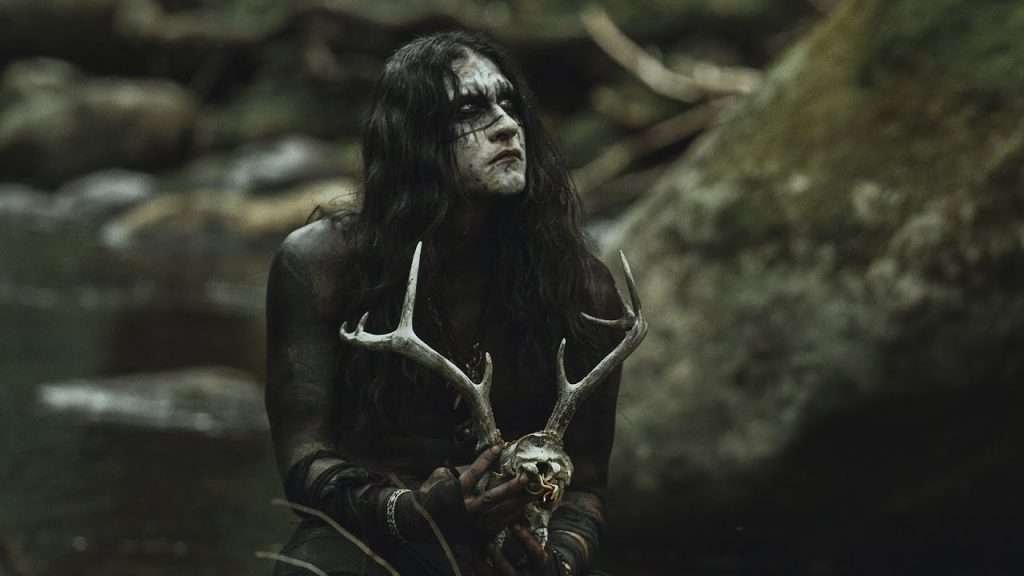
There are bands that arrive in a city with a great deal of expectation surrounding them, and then there are bands that seem to arrive carrying an entire landscape on their shoulders. Blackbraid belong firmly to the latter category. On August 11, Barcelona’s Razzmatazz 3 became the destination for a project that has managed to build a remarkably distinctive identity within contemporary black metal, not by trying to reinvent the genre from scratch, but by taking its coldness, its aggression and its fascination with nature and placing them inside a very different cultural and emotional landscape. It was also the first time Blackbraid had brought their music to Barcelona, and the response was considerable enough for the show to sell out weeks beforehand. By the time the lights went down, there was barely enough room left in the small Razzmatazz venue to pretend this was going to be an ordinary Tuesday night.
The evening had started with SOTABOSC, whose presence made considerably more sense than simply filling the support slot. Their atmospheric approach to black metal provided an effective introduction to what was coming, although the two bands inhabit very different worlds. There was no need for grand gestures or excessive theatrics from the Catalans; their music was enough to begin changing the temperature of the room. It was the sort of performance that works precisely because it does not try to compete with the headliner, instead allowing the audience to settle into the darker side of the evening before Blackbraid eventually took over. By the time the last notes disappeared, the room was already prepared for something considerably more intense.
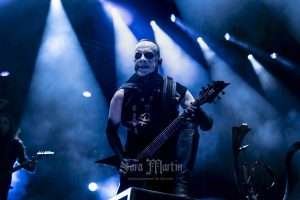
At approximately 9:10 PM, Sgah’gahsowáh and his band appeared on stage and went straight into Celestial Bloodlust, and the difference was immediate. The first thing that struck me was not the imagery surrounding Blackbraid, but the sheer physicality of the performance. There is a tendency to describe atmospheric black metal in terms of landscapes, spirituality and transcendence, sometimes forgetting that the genre is supposed to hurt. In a small room such as Razzmatazz 3, there was nowhere for that violence to hide. The guitars arrived with enough weight to make the air feel considerably thicker, the drums pushed everything forward with an almost relentless momentum and the vocals cut through the mix without sacrificing the harsher edge that gives the songs their character.
The opening sequence was particularly well chosen because it immediately demonstrated the breadth of the material. Celestial Bloodlust gave way to Wardrums at Dawn on the Day of My Death, followed by The Spirit Returns and The Wolf That Guides the Hunters Hand, effectively moving between different chapters of the Blackbraid catalogue without allowing the concert to lose its momentum. Rather than approaching the set as a chronological presentation of three albums, the band treated the material as one large body of work, which made the differences between the records less important than the atmosphere created by the performance itself. The setlist would eventually draw from Blackbraid I, Blackbraid II, Blackbraid III and Nocturnal Womb, with ten pieces forming a roughly seventy-minute performance.
And that atmosphere was perhaps the most impressive aspect of the evening. Blackbraid do not need to spend every second of a song at maximum intensity to make their music powerful. One of their greatest strengths lies in understanding the contrast between violence and contemplation. The River of Time Flows Through Me offered one of those moments in which the aggression seems to retreat just enough to reveal the emotional core beneath it, before The Dying Breath of a Sacred Stag brought the weight back into the room. These transitions are important because they prevent the show from becoming a continuous wall of black-metal distortion. There is darkness here, certainly, but there is also space, melancholy and a genuine sense of movement.
This is where the difference between seeing Blackbraid live and simply listening to the records becomes apparent. On record, it is easy to focus on the project’s Native American identity and the way it has been incorporated into atmospheric black metal. Live, however, those elements become part of something much more immediate. The indigenous references are not presented as decoration placed on top of a conventional black-metal foundation; they are woven into the melodies, the percussion, the atmosphere and the way the songs breathe. The result does not feel like an attempt to reproduce a Scandinavian template with a different visual identity. Blackbraid have absorbed the language of black metal and are speaking it with their own accent.
The middle section of the concert was probably where that quality became most evident. The Dying Breath of a Sacred Stag and Twilight Hymn of Ancient Blood created an almost cinematic progression, moving from aggression towards something considerably more spacious before the band introduced the Flute Solo. It was a relatively brief interlude, but an important one because it provided a clean break from the relentless guitar attack and reminded everyone that Blackbraid are interested in sound as much as they are in volume. The flute did not feel like an exotic ornament inserted into a metal show for the sake of novelty. It functioned as another voice within the landscape the band had been constructing since the first song.
Then came Sacandaga, followed by Barefoot Ghost Dance on Blood Soaked Soil, and there was something fitting about ending the set with the latter. If Blackbraid can sometimes be difficult to describe without falling back on the usual vocabulary of atmospheric metal, Barefoot Ghost Dance on Blood Soaked Soil provides the answer in musical form. It contains the violence, the melancholy, the connection with nature and the feeling of something ancient being carried into the present without needing a paragraph explaining any of it. The song works because all those elements are already inside the composition. Live, surrounded by an audience packed into a relatively small Barcelona venue, its impact was magnified considerably.
The audience itself deserves a mention because this was one of those shows where the distance between stage and floor disappeared surprisingly quickly. The first rows were particularly active, but the response was not limited to the inevitable moshpit energy that accompanies an extreme-metal concert. There was a genuine sense that people had come to experience the band rather than simply tick songs off a setlist. That may sound like an insignificant distinction, but it matters with a project such as Blackbraid, where the emotional dimension of the music is as important as the aggression. The room could go from absolute chaos to complete attention within the space of a few minutes, following the songs rather than simply reacting to their volume.
There was also something slightly ironic about watching such an enormous-sounding band inside Razzmatazz 3. The venue is not large, and on a night when the show was sold out it became hot, crowded and occasionally claustrophobic. Yet those limitations ultimately worked in the band’s favour. Blackbraid do not necessarily need a gigantic festival stage to communicate their music. In fact, the proximity made some of the quieter moments considerably more effective because there was nowhere for the atmosphere to dissipate. When the guitars became enormous, they filled every corner of the room; when the music became quieter, you could actually feel the audience waiting for the next eruption.
And that may be the most interesting thing about Blackbraid at this particular stage of their career. The project has become successful enough to play major European festivals and increasingly prominent venues, but it has not yet lost the feeling of being something discovered rather than manufactured. The Barcelona concert belonged to that transitional moment in which a band can still play a relatively small room while attracting an audience that clearly believes it is watching something that could become considerably bigger. The fact that only two days later Blackbraid were scheduled to take the stage at Summer Breeze in Germany underlines just how quickly the scale of the project is changing.
There is, naturally, a great deal of discussion surrounding the identity of Blackbraid, and it would be impossible to ignore the importance of indigenous representation within a genre whose imagery has historically been dominated by European mythology. But I would rather leave the political and cultural dissertations to people far better qualified to write them. What interested me in Barcelona was the fact that the identity is not being used as a substitute for songwriting. Blackbraid would still need to be a good black-metal band without the mythology surrounding the project, and fortunately, they are. The riffs work, the melodies stay with you, the contrasts between aggression and atmosphere are carefully constructed and the live performance has enough force to justify the attention they have received.
If anything, the show confirmed that the most convincing aspect of Blackbraid is the balance between familiarity and individuality. You can hear the lineage of atmospheric black metal in the music: the tremolo-picked guitars, the harsh vocals, the blast beats, the long melodies and the fascination with landscapes that has been part of the genre since its earliest days. But you can also hear something that does not belong to that tradition alone. The flute, the rhythmic elements and the particular emotional weight of the compositions prevent the band from simply becoming another name in the endless procession of atmospheric black-metal projects.
After approximately seventy minutes, Barefoot Ghost Dance on Blood Soaked Soil brought the journey to an end. There was no need for an encore, and perhaps that was for the best. The set had followed a clear arc, beginning with violence, opening into more atmospheric territory and eventually returning to the most visceral side of the project. Ten songs were enough. Anything more might have diluted the effect. The lights came back on, the room returned to being Razzmatazz 3 rather than whatever strange place the music had temporarily transformed it into, and Barcelona went back to being Barcelona.
That is ultimately what I took away from the first Blackbraid show in the city. Not a religious ceremony, not some supernatural experience and certainly not the theatrical descent of an imaginary shaman into the depths of Catalonia. It was simply a very good extreme-metal concert performed by a band that understands the importance of atmosphere without allowing atmosphere to become an excuse for weak songwriting. Blackbraid have found a way to take a genre with an extraordinarily well-established vocabulary and use it to tell a story that belongs to them.
And perhaps that is why the concert worked so well. The mountains of the Adirondacks are a long way from Barcelona, but for seventy minutes the distance hardly mattered. The cold wind, the forests, the blood, the ghosts and the rivers were all there, translated into distortion, drums and melody. We did not need to travel to the wilderness to hear them. The wilderness came to us.