Vreid: The Skies Turn Black (2026, Indie Recordings)
Five years after Wild North West, Vreid return with an album that looks back towards their Sognametal roots without becoming a simple exercise in nostalgia. From the melancholic landscapes of From These Woods to the gothic detour of Loving the Dead and the cinematic atmosphere of Kraken, The Skies Turn Black is an unexpectedly varied journey through everything that has made Vreid such a singular band.
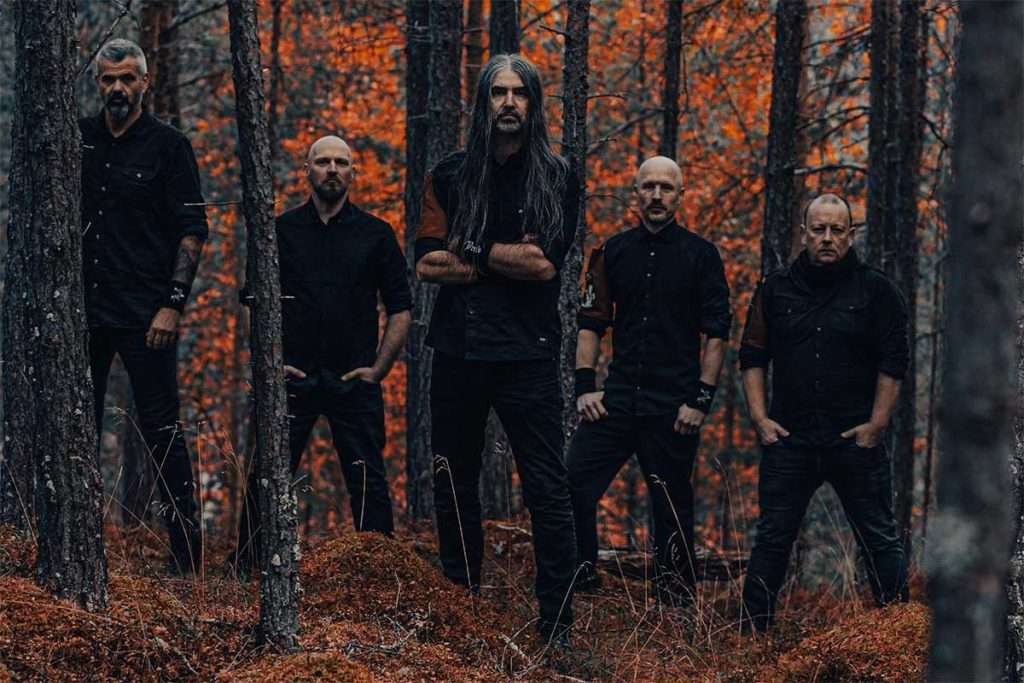
There are albums that require several listens before revealing their true intentions, and then there are others that seem to arrive with their identity already established, only to reveal little details with every subsequent spin. Vreid have always belonged, to some extent, to the latter category, although The Skies Turn Black is perhaps one of the most difficult records in their discography to put into a single box. Five years have passed since Wild North West, and during that time the Norwegian quartet have apparently had enough opportunity to look backwards, forwards and sideways before deciding exactly where they wanted to go. The result is an album that does indeed reconnect with the essence of their so-called Sognametal, as the band themselves have described it, but which at the same time refuses to simply reconstruct the sound of their earliest years. Released on March 6, 2026 through Indie Recordings, this tenth full-length is instead a curious journey through several of the faces that Vreid have shown throughout their career.
Perhaps this is also why the album has acquired a slightly different meaning for me after seeing Vreid at Wacken this year. I already knew their music and had followed the band for years, but there are groups that make considerably more sense once you have experienced them in front of an audience, and Vreid are certainly one of them. Their performance in Germany was one of those concerts that leave you wondering why you had not paid even more attention to the band before, particularly when they brought Agnete Kjølsrud and Chris Pontius onto the stage. Coming back to The Skies Turn Black afterwards, therefore, has been a rather interesting experience, because what initially appeared to be an album that looked towards the band’s past now sounds more like a summary of everything that makes Vreid interesting in the first place.
The first few minutes already provide a fairly convincing argument for that interpretation. From These Woods opens the album with almost seven minutes of music in which melody and atmosphere take precedence over sheer aggression, and it is probably the song that comes closest to explaining where Vreid wanted to position themselves after such a long absence. There is a certain familiarity in its riffs that inevitably brings the band’s earliest material to mind, but the arrangement is sufficiently expansive to prevent it from becoming a simple exercise in nostalgia. The melodic guitar work, the clean passages and the melancholic atmosphere create that unmistakable feeling of being somewhere in the Norwegian landscape, surrounded by forests and mountains, while the heavier sections remind us that this is still a black-metal record at heart. The fact that the song was originally written during a late-night session in a remote mountain cabin makes considerably more sense once you hear it, because there is something almost physical about the relationship between the music and that environment.
It would be very easy, and perhaps even tempting, to use the name Windir every time the melodies become more recognisable, but that would do Vreid a disservice. The connection is inevitable because of the band’s history and because Hváll, Sture Dingsøyr, Stian Bakkland and Steingrim built their musical identity in the same Sogndal environment that produced Windir, but The Skies Turn Black does not sound like a group trying to recover something that disappeared in 2004. From These Woods has some of that old sense of melody and landscape, while Flammen later pushes the connection even further, yet both songs sound like the work of musicians who have spent more than two decades developing their own language. The difference is subtle but important: this is not a tribute to the past, but rather an acknowledgement that the past is still part of the band’s DNA.
The title track immediately demonstrates how broad that DNA can be. The Skies Turn Black is more direct, built around a comparatively simple and effective riff that gives the album a much harder edge after the expansive opening track. There is something particularly satisfying about the way Vreid handle this kind of material because they never need to bombard the listener with unnecessary technicality. The riffs are memorable, the rhythm section keeps everything moving and Sture Dingsøyr‘s vocals provide the necessary harshness without dominating the music. A Second Death follows a similar path, although with a slightly more aggressive character, and together the two songs establish the black-metal backbone of the album before Vreid begin to open the doors to some of their more unusual ideas.
One of those doors leads directly to Kraken, an instrumental that could easily have become a strange interruption in the middle of a black-metal album but instead works as one of its most atmospheric moments. The track was originally created for the soundtrack of the Norwegian monster film Kraken, and its presence here gives The Skies Turn Black an almost cinematic interlude. There are no vocals to anchor the listener, so the guitars, keyboards and rhythm section are allowed to create a darker and more spacious landscape, and the result feels less like a conventional song than a brief journey beneath the surface. There is something wonderfully old-fashioned about the idea of a black-metal band suddenly turning its attention towards a sea monster and composing an instrumental soundtrack piece, but Vreid make it work because atmosphere has always been one of the band’s greatest strengths.
Then comes Loving the Dead, and this is where the album takes its most unexpected turn. The collaboration with Agnete Kjølsrud of Djerv introduces a completely different vocal character, while the song itself moves into gothic rock, synth-driven territory and a much more theatrical atmosphere. On paper, it sounds like the kind of experiment that could have destroyed the flow of the album, and it is true that it initially feels almost like somebody has opened a completely different record halfway through the listening session. Yet that contrast is precisely what makes the song memorable. Agnete Kjølsrud does not merely provide a guest appearance that could have been replaced by almost anybody else; her voice becomes one of the central elements of the composition, moving between seductive melodies and more unhinged passages that give the song a personality of its own.
The accompanying video, with Chris Pontius making an appearance, only reinforces the impression that Vreid were perfectly aware of how far away from their traditional territory they were moving. It would be easy to dismiss Loving the Dead as a novelty or as a standalone experiment that does not belong on a black-metal record, and even I can understand that criticism because the transition is abrupt. Nevertheless, I would rather have a veteran band take this kind of risk than spend fifty-five minutes reproducing the same song in eleven different forms. At its best, Vreid have always been a band interested in combining seemingly incompatible elements, and Loving the Dead is simply the most obvious manifestation of that tendency on this album.
After such a detour, Build & Destroy brings everything back into focus. Its three minutes are almost a declaration of intent, with a much rawer and more primitive sound that recalls the darker side of Norwegian black metal without becoming an exercise in imitation. The guitar tone is particularly effective here, and the song benefits from its brevity because Vreid do not have time to overcomplicate the idea. It arrives, destroys everything in its path and disappears before the listener has time to become comfortable. In some ways it is the perfect counterpoint to Loving the Dead, demonstrating that the band’s willingness to experiment does not mean they have forgotten how to write a direct black-metal song.
If there is one track that manages to unite most of these different tendencies, however, it is Chaos. At almost seven minutes, it gives Vreid enough room to build something much more expansive, and the song gradually develops from aggressive riffing into a more epic and atmospheric composition. This is where the album’s title begins to make more sense, because there is a constant sensation of something approaching on the horizon, with the guitars becoming progressively larger without losing the coldness that defines the band’s sound. Chaos is not necessarily the most immediate song on the album, but it is one of the ones that benefits most from repeated listens because its different sections gradually reveal themselves instead of simply presenting everything at once.
The following Flammen is perhaps the most obvious reminder of why the Sognametal label exists in the first place. There is a melancholy in its melodies that feels deeply rooted in the Norwegian tradition, but the song is not content to remain in a single register. The cleaner and more melodic passages contrast with the harsher sections, and once again the guitars become the principal storytellers. This is one of those moments when the connection with Windir becomes impossible to ignore, although it is also where the distinction between the two bands becomes most important. Vreid are not trying to recreate Arntor or 1184; they are taking elements that have been part of their musical vocabulary for decades and using them within a composition written in 2026.
The final stretch of The Skies Turn Black is perhaps the most curious of the entire album because it moves further away from conventional black metal without ever completely abandoning its foundations. Smile of Hate is built around a more straightforward heavy-metal approach, but the lyrics and atmosphere retain the darkness that has characterised the album from the beginning. There is a certain irony in the line about some days saving the world and others letting it burn, because it captures quite well the emotional duality that runs through the record. Vreid sound like a band that knows exactly where it comes from, but they also sound increasingly uninterested in restricting themselves to the expectations that come with that history.
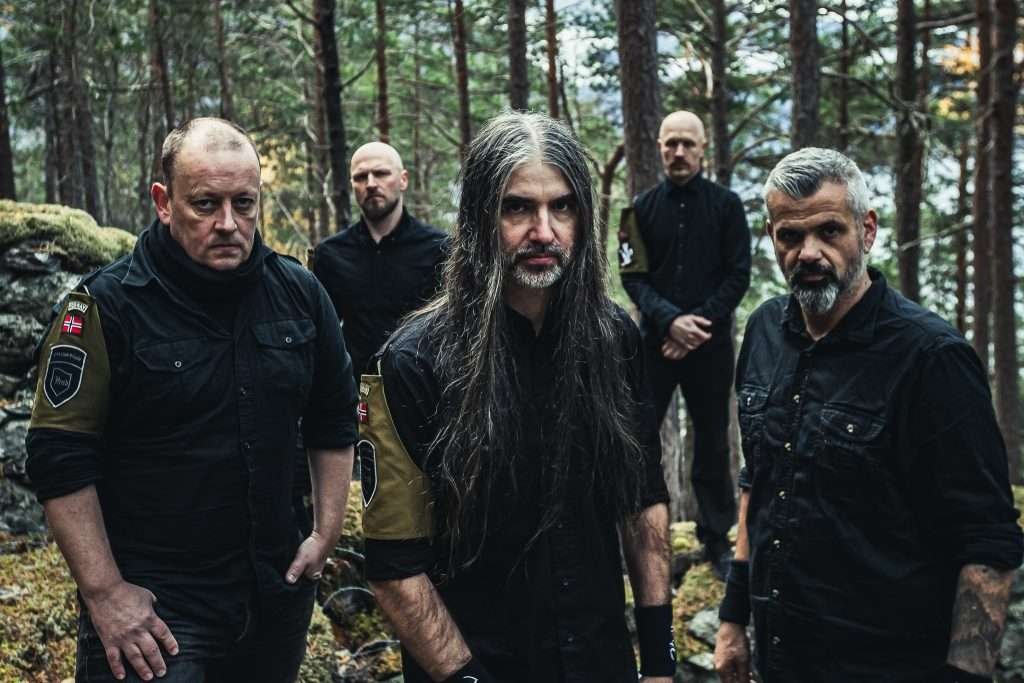
That becomes even clearer with Echoes of Life, perhaps the most divisive song on the record. The clean vocals and more progressive, almost seventies-inspired arrangement make it stand apart from practically everything that came before it, and I suspect this will be one of those songs that listeners either embrace immediately or simply tolerate until the next track begins. Personally, I find its presence fascinating precisely because it makes the album less predictable. The guitars and keyboards give it an almost psychedelic quality, while the rhythm section maintains enough weight to prevent the song from floating completely away from the rest of the record. It is not the sort of composition I would have expected from Vreid, but after hearing the band move from black metal to gothic rock, cinematic instrumentals and traditional heavy-metal influences during the previous fifty minutes, perhaps expecting anything from them at this point would be rather pointless.
Fortunately, The Earth Rumbles closes the album by bringing back some of the weight that had gradually been disappearing during the previous two songs. The keyboards and classic-rock elements remain present, but the riffs are considerably more direct and the whole thing feels like a natural conclusion rather than another experiment thrown into the final minutes. There is something satisfying about ending the album this way because The Skies Turn Black has spent its entire running time moving between different versions of Vreid, and the closing track manages to gather several of them together without sounding forced. The eleven songs amount to 55 minutes and 37 seconds, enough time to explore these ideas without turning the record into an endurance test.
And that may ultimately be the most important thing about The Skies Turn Black. It is not necessarily the album I would recommend to somebody who wants the most uncompromising black-metal release of the year, nor is it an album that will satisfy listeners who expect Vreid to remain permanently chained to the sound of their earliest records. Instead, it works because the band have understood that their history is an ingredient rather than a prison. The melodic side of From These Woods and Flammen, the rawer attack of Build & Destroy, the gothic experiment of Loving the Dead, the cinematic atmosphere of Kraken, the epic construction of Chaos and the progressive tendencies of Echoes of Life all belong to the same album, even if they do not always appear to belong together at first glance.
There is also something rather appropriate about the fact that this is the tenth Vreid album. A milestone like that could easily have encouraged a band to look backwards and produce a safe summary of everything they had already achieved, but The Skies Turn Black does something slightly more interesting. It looks backwards, certainly, but it also looks sideways, and occasionally even somewhere completely unexpected. The result is not always perfectly cohesive, and I suspect some listeners will consider Kraken or Loving the Dead too detached from the central sound of the album, but I would argue that those moments are precisely what prevent the record from becoming another competent addition to a veteran band’s catalogue.
After seeing Vreid live at Wacken and subsequently returning to this album, I find myself appreciating that attitude even more. The ferocity that came through on stage is certainly present here, but so are the quieter moments, the strange detours and the willingness to let melody take control when the composition demands it. Vreid have spent more than twenty years living under the enormous shadow of the Norwegian black-metal tradition and under the unavoidable legacy of Windir, yet they have reached a point where they no longer need to apologise for either their past or their desire to explore something different. The Skies Turn Black feels like the work of a band that has finally understood that these two things can coexist.
The skies may turn black, but Vreid have never sounded particularly interested in standing still beneath them. And after five years without a new album, that is probably the best thing they could have done.