Song of the day: “Metal Icarus” by Angra
A journey back to 1998, when Angra were at the height of their first great era and “Metal Icarus” brought together everything that made the Brazilian band so special: soaring melodies, relentless rhythm and guitars that seemed determined to reach the sun.
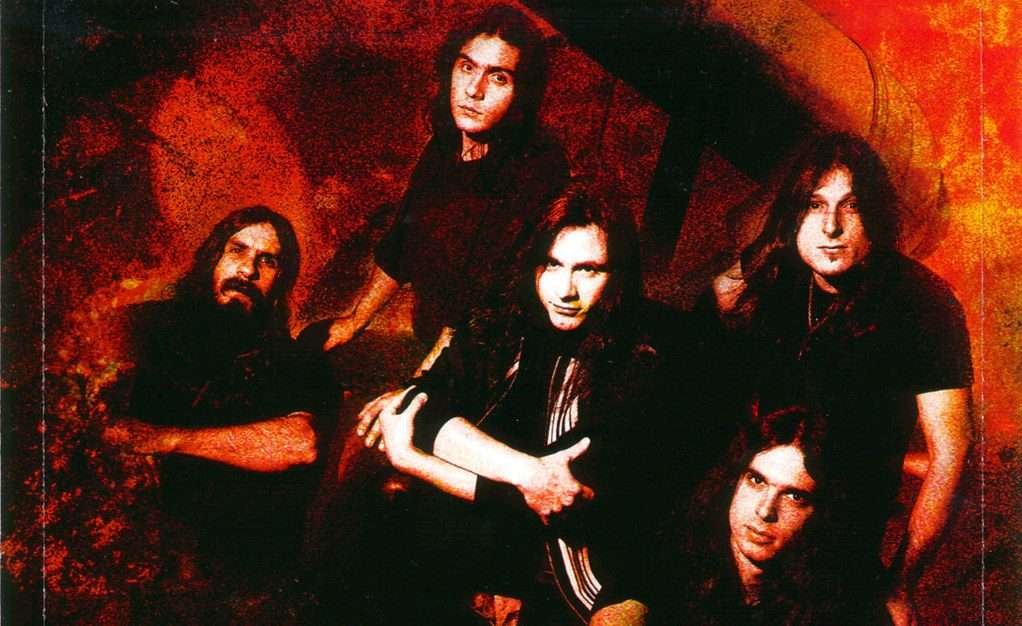
There was a time when Angra seemed almost incapable of writing a song without throwing another handful of ideas into the mix, and “Metal Icarus” is perhaps one of the finest examples of that particular virtue. Taken from 1998’s Fireworks, the song sits at an interesting point in the band’s history, following the enormous ambition of Holy Land while taking a slightly more direct approach to their music. It may not have the Brazilian influences or progressive ambition of its predecessor, but it certainly retains the qualities that made Angra so exciting: speed, melody, classical arrangements and, above all, two guitarists who clearly had no intention of wasting a single second of playing time. Kiko Loureiro and Rafael Bittencourt weave their guitars around each other throughout the song, moving effortlessly between harmonised melodies, razor-sharp riffs and the sort of solos that made late-nineties power metal such a wonderful playground for guitar players. The impressive thing is that none of this feels like technicality for its own sake. The song remains remarkably coherent despite everything happening inside it, with André Matos providing the melodic centre while Luís Mariutti and Ricardo Confessori keep the whole machine moving underneath.
By 1998, this kind of musicianship was hardly unusual in itself. The decade had inherited the guitar heroes of the eighties, while bands such as Helloween, Gamma Ray, Stratovarius and Blind Guardian had helped establish a new generation of European power metal in which speed, melody and virtuosity were once again perfectly acceptable ingredients. What made Angra different was the way they absorbed those influences without simply becoming another European power metal band. Angels Cry had already announced their technical credentials, while Holy Land had demonstrated that their Brazilian identity could become an essential part of the music rather than a decorative afterthought. Fireworks was more streamlined, but songs such as “Metal Icarus” showed that the band had not suddenly forgotten how to make their instruments sound enormous. There is something wonderfully characteristic about hearing Loureiro and Bittencourt trading ideas while Matos soars above them: it is unmistakably Angra, but it also belongs to that wonderfully excessive period when bands still believed that a song could be melodic, progressive, technically demanding and completely over the top without having to apologise for any of it.
The title is also an unusually appropriate one. The myth of Icarus has always been about ambition, about refusing to accept the limits imposed upon you and discovering how far you can go before the consequences arrive. Heavy metal has never exactly been short of characters with that particular attitude, but it feels especially fitting for a Brazilian band that had spent the first half of the nineties proving that they could stand alongside the giants of the European scene. Angra had already achieved something remarkable simply by reaching that position, and “Metal Icarus” sounds like a band enjoying the view from above rather than worrying about the possibility of falling. There is an almost infectious optimism in the song, even when the guitars become increasingly elaborate, and that is perhaps what makes it so enjoyable today. It does not sound like musicians trying to demonstrate that they are better than everybody else; it sounds like musicians who have discovered what they are capable of and are having an enormous amount of fun finding out how far they can push it. That distinction is important, particularly when revisiting a period in which technical ability could sometimes become an end in itself. Angra understood that a spectacular solo means very little if you cannot remember the song afterwards. “Metal Icarus” gives you both.
There is also a bittersweet quality to the song when heard with the benefit of hindsight. Fireworks would be the final Angra album to feature Matos, Mariutti and Confessori alongside Loureiro and Bittencourt, bringing the band’s first great chapter to an end. At the time, however, there was no reason to listen to “Metal Icarus” as a farewell. Quite the opposite: this is a band sounding hungry, confident and full of possibilities. That is perhaps what makes the recording so fascinating. We know that the chemistry between these five musicians would soon disappear, but the music itself gives no indication that anything is about to collapse. It simply captures Angra at a particular moment, with five young musicians at the top of their game and an entire musical world still apparently waiting for them. The lineup would change, the band would continue and both Angra and Matos would write very different chapters afterwards, but there is something uniquely exciting about this version of the group. They were still close enough to their beginnings to retain that sense of discovery, yet experienced enough to make their ambitions sound completely justified.
And perhaps that is why “Metal Icarus” deserves to be heard again. Not because it is the most important song Angra ever recorded, nor because it tells us everything we need to know about Fireworks, but because it captures an era in which heavy metal could still be gloriously ambitious without taking itself too seriously. The riffs are sharp, the melodies are huge, the guitars are everywhere and André Matos sounds like he was born to stand in the middle of all that noise. There is no need to overanalyse it beyond that. Put the headphones on, wait for Loureiro and Bittencourt to start trading fire and remember why this particular generation of power metal musicians made so many of us fall in love with guitars in the first place. Icarus may have flown too close to the sun, but for Angra, the flight itself was the important part.
Turn it up