Castle: Carrie Chains (2026, Hammerheart Records)
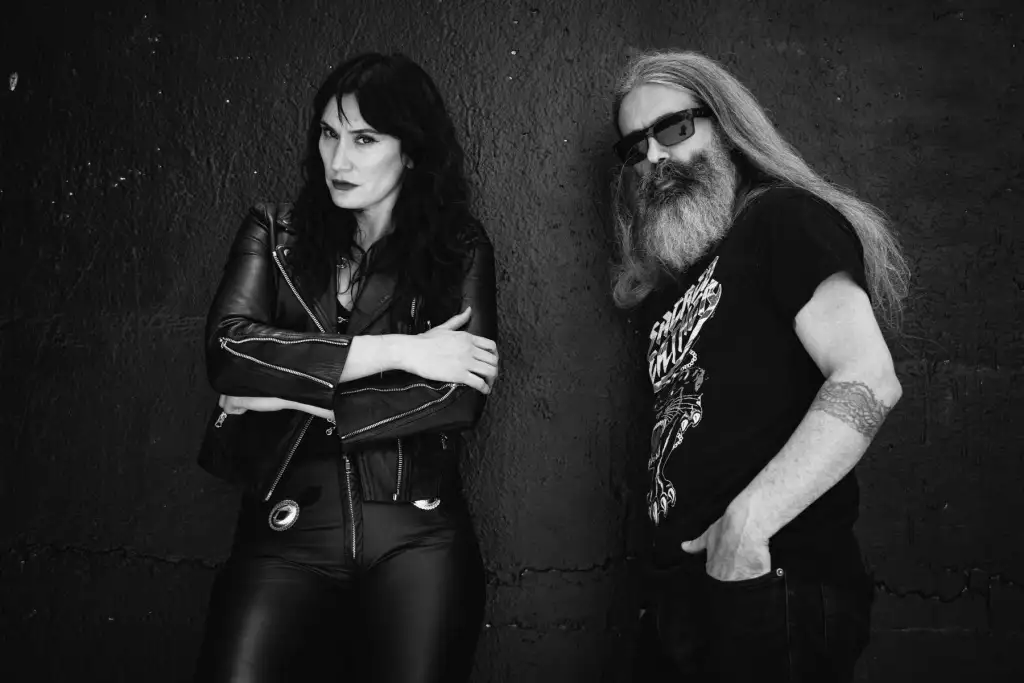
There are records that sound as though they were written in a rehearsal room, records that sound as though they were assembled in a studio, and then there are records that sound as though they were discovered somewhere they probably should not have been looking. Carrie Chains, the seventh full-length from Castle, belongs firmly to the third category. There is something wonderfully disreputable about the world created by Liz Blackwell, Mat Davis and drummer Mike Cotton, a place of chains, crooked crosses, haunted roads, occult visions and characters who seem to have stepped out of a forgotten horror film and immediately found themselves standing in front of a wall of amplifiers. Released through Hammerheart Records on September 4, 2026, the album does not attempt to reinvent the formula that has carried Castle through more than fifteen years of existence. Instead, it strips it down, turns the volume up and reminds us why this particular combination of heavy metal and doom has always worked so well for them.
There is a particular visual quality to Carrie Chains that makes it almost impossible not to think of Italian horror cinema. Not the polished gothic elegance of Dario Argento, although there are moments here that could certainly inhabit the red and black corridors of Suspiria (Dario Argento, 1977), but something considerably dirtier and more physical. The record feels closer to the rotten, feverish atmosphere of The Beyond (Lucio Fulci, 1981), where the supernatural is never particularly interested in behaving according to human logic and where every apparently harmless location seems to conceal something horrible underneath. Castle have always possessed an occult streak, but there is less of a sense of ritual theatre here and more of a feeling that the ritual has already gone wrong. The chains are rattling, the door has been opened and whatever was behind it has decided to follow you home.
That is probably the first important distinction between Carrie Chains and its predecessor, Evil Remains. The latter leaned heavily into horror imagery and atmosphere, creating a particularly effective combination of doom metal and supernatural menace. The new record does not abandon those ingredients, but it places considerably more emphasis on movement. The road is everywhere. Truckgrinder is quite literally an ode to the touring life and to the endless kilometres connecting one show to the next, while several of the riffs possess the kind of forward momentum that makes it difficult to remain completely still while listening. The band themselves have described the song as a tribute to the road and the touring life that keeps them moving, and that sense of perpetual motion is one of the things that gives the album its character.
This is not doom metal in the traditional sense of sitting patiently in the dark waiting for the apocalypse. Castle understand doom as weight, atmosphere and attitude, but they are equally interested in the physicality of heavy metal. The riffs frequently have enough muscle to drag the songs forward rather than allowing them to collapse under their own heaviness. That balance has always been one of the band’s strongest weapons, and Carrie Chains perhaps represents one of their clearest demonstrations of it. There is enough doom to keep the sky permanently overcast, enough traditional heavy metal to keep the engine running and enough rock ‘n’ roll swagger to ensure that the whole thing never becomes unnecessarily solemn.
The opening stretch of the album establishes that philosophy particularly well. Fooled Again arrives with the kind of immediate guitar work that reminds us that Castle have never needed three guitarists, keyboards or layers upon layers of studio ornamentation to create an imposing sound. Mat Davis‘ guitar is the engine, Liz Blackwell‘s bass provides a thick foundation underneath it and her unmistakable voice sits somewhere between a traditional heavy-metal command and the rasp of someone who has spent too much time breathing smoke in underground clubs. The trio format is important because it gives the songs an almost confrontational quality. There is nowhere for the music to hide.
That directness becomes particularly obvious on 3 Knocks, perhaps one of the clearest examples of the band’s ability to turn very familiar ingredients into something that still feels alive. Castle themselves have described the song as a throwback to their classic sound, drawing on the majestic riffs of Black Sabbath and the darker side of Mercyful Fate, and that is precisely what makes it work. The riff does not need to reinvent heavy metal; it needs to hit at the right moment, and Castle understand that distinction perfectly. The song feels like someone hammering on a door three times in the middle of the night, knowing full well that whoever answers should probably not be there.
Carry Chains pushes the album further into anthem territory without sacrificing its darker identity. It is perhaps the closest thing here to a traditional fist-in-the-air heavy-metal number, but Liz Blackwell prevents it from becoming too clean or celebratory. Her voice carries enough grit to keep the song grounded in the same world as the more sinister material, while Mat Davis supplies another of those riffs that seem simple until you realise how difficult it is to make something this familiar sound convincing. The song also introduces the central figure of Carrie Chains, an underdog character whose story is tied to the album’s broader themes of resistance and overcoming adversity. Interestingly, Blackwell has explained that several of these songs originated from ideas developed during the band’s early touring years, which makes the album feel less like a collection of newly manufactured concepts and more like old ghosts finally finding their way onto a record.
That long gestation period may explain why Carrie Chains feels so instinctive. Castle did not sit down and decide that album number seven required another collection of doom riffs. Some of these ideas had been travelling with them for years, bouncing around backstage rooms and long night drives until they eventually became songs. There is something very romantic about that process, particularly for a band whose music has always been closely connected to the mythology of touring, occult rock and heavy metal as a lifestyle rather than simply a musical genre.
Evil Nun is where the doom element becomes more prominent, and the title alone could probably have been lifted from the poster of some obscure European horror production discovered at two in the morning in a second-hand video shop. Yet the music never becomes cartoonish. The riff is heavy without being slow for the sake of being slow, while Blackwell gives the song the sort of vocal presence that makes the supernatural imagery feel surprisingly tangible. This is one of those moments where the comparison with Fulci becomes useful again. The horror is not elegant. It is not particularly interested in explaining itself. It simply exists, and the only sensible response is to keep the lights on.
Then comes Truckgrinder, and suddenly the haunted house has wheels. This may be the album’s most revealing transition because it demonstrates how far Castle are willing to move away from the expectations attached to doom metal. The song is fast, dirty and propelled by a rhythm that feels more at home on a motorway at three in the morning than in a cemetery. There is a little bit of Motörhead in the attitude, certainly, but it never becomes a cheap imitation because the guitar language remains unmistakably Castle. The band have described it as their ode to the road, and you can hear that intention in practically every second. It is the sound of a band that has spent years travelling between cities and has discovered that the journey itself can be as important as the destination.
The following Orb Weaver is where the album’s atmosphere becomes more psychedelic and unpredictable. The song begins in a considerably more restrained fashion before the guitars and rhythm section gradually pull it into darker territory, creating one of the record’s more intriguing pieces. It is not simply another riff followed by another riff. There is a sense of movement within the arrangement, as though the song is weaving its own web around the listener. The title could hardly be more appropriate. This is Castle at their most atmospheric, but without losing the physicality that defines the rest of the album.
And perhaps this is where the Argento comparison works better than it initially seemed. Orb Weaver has the kind of contrast between beauty and unease that made films such as Suspiria (Dario Argento, 1977) so effective. The music can be melodic, almost hypnotic, and yet there is always something wrong in the background. The melody does not necessarily make the darkness disappear; it makes the darkness more visible. That has always been one of the great tricks of horror cinema, and Castle understand it instinctively.
Goat Vision brings us back to the riff, but by now the album has established enough atmosphere for even a comparatively straightforward heavy-metal composition to feel like part of the same nightmare. The song is one of the more immediately memorable pieces here, with Davis once again proving that a good riff does not require excessive ornamentation. It needs personality. Blackwell supplies the other half of that personality with a performance that has become one of the defining characteristics of the band. There are plenty of singers who can sound powerful; considerably fewer can make a familiar heavy-metal melody sound as though it has been dragged through a swamp before reaching the microphone.
This is also where the influence of the seventies and eighties becomes impossible to ignore. Black Sabbath, Judas Priest and Mercyful Fate are obvious reference points, and the band have never attempted to hide them. But the important thing is that Carrie Chains does not sound like a tribute record. The influences are the vocabulary, not the sentence. Castle know the grammar of traditional heavy metal extremely well, but they use it to tell their own stories. The riffs are familiar because the language is familiar; the voice speaking it is not.
There is also something reassuringly old-fashioned about the album’s production. Castle recorded Carrie Chains live in the studio for the first time, with Mike Cotton behind the kit and Jesse Gander producing at RainCity Recorders in Vancouver. The intention was to retain a raw, immediate feeling throughout the recording and mastering process, and it works particularly well because the music depends so heavily on interaction between guitar, bass and drums. Instead of separating every instrument until the musicians sound like three people playing in different rooms, the production lets them occupy the same physical space.
That makes a difference. The bass has weight, the drums push against the guitars rather than simply following them and Blackwell‘s voice sounds like another instrument within the trio rather than a vocal track placed above everything else. It is the sort of production that rewards volume, preferably the kind of volume that would make a sensible neighbour reconsider their life choices. Carrie Chains does not sound particularly interested in being background music.
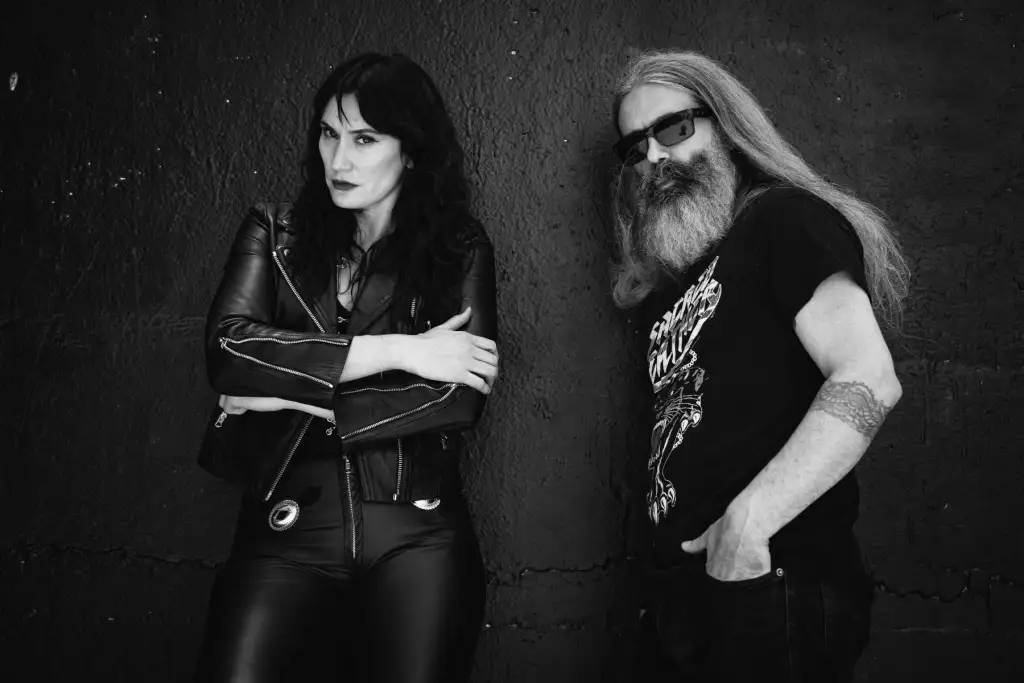
The closing Burn The Messenger gathers most of these ingredients together and perhaps makes the strongest case for the album as a whole. The song possesses the heavy riffing, the darker atmosphere, the melodic instinct and the commanding vocal performance that define Castle, but it also carries an emotional weight that prevents the record from ending simply with another straightforward rocker. There is a sense of resolution without anything resembling a happy ending. The door is still open, the road is still waiting and the things in the shadows have not disappeared.
That is ultimately what makes Carrie Chains such an enjoyable record. It does not pretend to be revolutionary, and it certainly does not need to be. Castle have spent years refining a combination of heavy metal, doom and occult rock until the ingredients have become recognisable as their own. What they have done here is tighten the screws, increase the immediacy and allow the songs to breathe with the kind of energy that only comes from musicians who have spent years playing together and hundreds of nights travelling between stages.
It would be easy to describe Carrie Chains simply as another Castle album, and technically that would be true. But there is a subtle difference between repetition and identity. A band repeats itself when it has nothing else to say; a band develops an identity when the same ingredients continue to produce something recognisably alive. Seven albums into their career, Castle have reached the point where a riff can sound like a riff from the band’s past without feeling like nostalgia. That is a considerably more difficult achievement than it sounds.
Perhaps the best way to describe Carrie Chains, then, is as a horror film without the need for a screenplay. The characters are there, the setting is there, the soundtrack is there and the road stretches endlessly into the darkness. Somewhere between the haunted corridors of The Beyond (Lucio Fulci, 1981), the lurid nightmare of Suspiria (Dario Argento, 1977) and the greasy motorway mythology of classic heavy metal, Castle have built a world that is simultaneously familiar and unmistakably their own.
And there is something rather fitting about that title. Carrie may be carrying chains, but Castle certainly are not chained to their past. They have taken old riffs, old ideas and old influences, thrown them into the back of the van and driven them somewhere new. The destination is not particularly important, the road is. Just turn the volume up and follow the headlights because somewhere ahead, beyond the next bend, there is probably another evil nun waiting!