Blackbraid: Nocturnal Womb (2026, Wolf Mountain Productions)
Too dark for Blackbraid III, two of the project’s most visceral compositions finally find their own home in Nocturnal Womb, an intimate and oppressive three-track release that explores the shadows lurking beneath Blackbraid’s increasingly expansive sound.
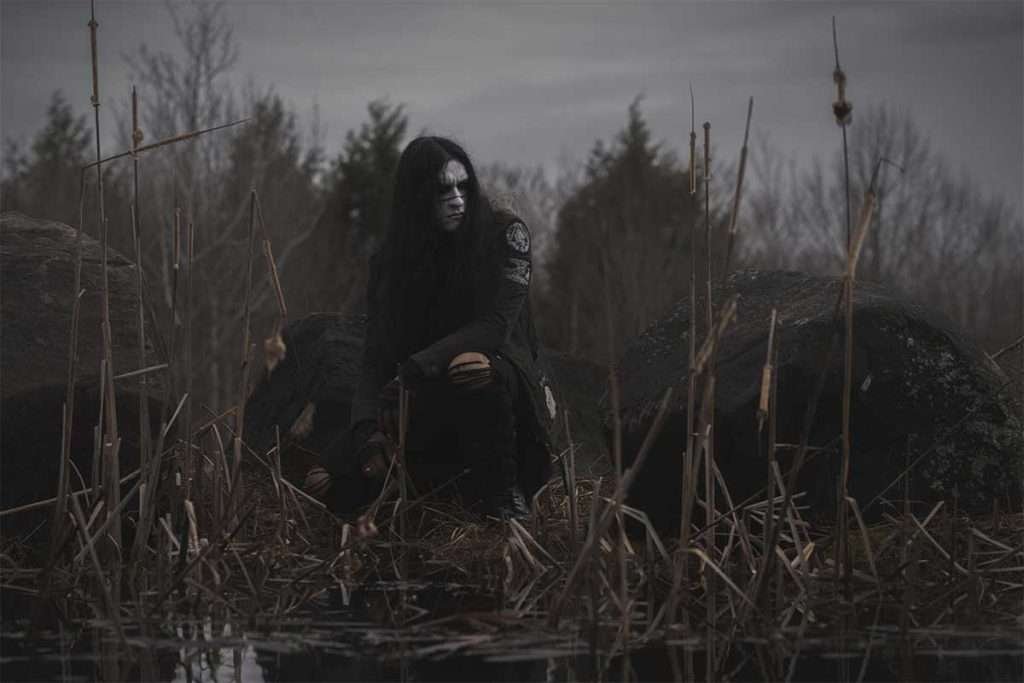
There is something strangely appropriate about discovering that the songs that did not fit the story were the darkest ones. Blackbraid III was already an expansive and cinematic record, a work that seemed to take the project further into the wilderness while opening its sound towards increasingly grandiose territories. But somewhere among all those melodies, narratives and triumphant passages, two songs apparently refused to behave. Nocturnal Womb and Celestial Bloodlust were considered too dark and visceral to belong to the story of Blackbraid III, and rather than forcing them into a record where they did not quite belong, Sgah’gahsowáh chose to let them exist somewhere else. The result is Nocturnal Womb, a three-track EP released in March 2026 that feels less like an appendix to the trilogy than a door opening into a considerably darker room.
Calling this release an EP is, of course, technically correct, but it almost undersells what is happening here. There are only three compositions, yet the first two are substantial pieces in their own right, while the closing Barefoot Ghost Dance on Blood Soaked Soil (Acoustic) completely changes the temperature of the record. It is a very small package, but it has been carefully assembled. Nothing feels like filler, and nothing sounds as though it has been included merely to make the running time look respectable. The two new compositions occupy the darkness, while the acoustic rendition acts almost like the embers left behind once the fire has gone out. It is a clever way of turning material that might otherwise have been dismissed as leftovers into something with its own identity.
The title track is where the difference becomes immediately apparent. Nocturnal Womb does not feel interested in the broad vistas that occasionally characterised Blackbraid III. It is claustrophobic instead, as though the forest has closed around you and there is no longer any horizon to look towards. The guitars remain recognisably Blackbraid, but the emphasis is different. There is less of that sense of looking outward and considerably more of looking inward, into something primitive and uncomfortable. The atmosphere is not built around majestic landscapes but around darkness itself, and the distinction is important because it gives the song a physical quality that makes it particularly effective at volume.
That is probably what Sgah’gahsowáh meant when describing these songs as too visceral for the previous record. Nocturnal Womb is not necessarily more extreme because it contains faster riffs or more aggressive vocals; its extremity comes from the way it removes some of the distance between the listener and the music. There is less cinematic grandeur separating you from what is happening. The guitars feel closer, the harsh vocals more immediate and the atmosphere considerably more oppressive. If Blackbraid III sometimes felt like standing on a mountain and watching an enormous landscape unfold beneath you, Nocturnal Womb feels like being underneath the mountain.
And then there is Celestial Bloodlust, which makes the contrast even clearer. The title alone sounds like something that should have been carved into the side of an ancient monument, but musically the song is far less concerned with majesty than the title might suggest. It is vicious, restless and surprisingly direct, and its aggression provides the EP with its most immediate punch. There are still melodic passages and atmospheric flourishes, but they are no longer allowed to dominate the composition. Everything seems to have been sharpened, stripped down and pushed towards the point where atmosphere becomes menace.
This is perhaps where the release becomes more interesting than the simple description of «dark material that did not fit on Blackbraid III» might suggest. On paper, it would have been perfectly possible to insert these two songs into the album. They share the same musical vocabulary, the same production and the same fascination with nature, blood and spirituality. Yet context changes everything. Placed among the more expansive pieces of Blackbraid III, they might have functioned as moments of darkness within a larger journey. Here, they are the journey. There is no brighter chapter waiting around the corner, no triumphant resolution to provide relief. The darkness is not a contrast. It is the subject.
That makes Nocturnal Womb an unusually concentrated Blackbraid release. The project has always worked with the tension between beauty and violence, but these three tracks allow the latter to occupy considerably more space. Even the title Nocturnal Womb suggests something simultaneously protective and threatening: a place where something is being formed, hidden from the light, not necessarily ready to be born. There is an almost subterranean quality to the record, as though we are listening to something taking shape beneath the more visible mythology of Blackbraid.
The production helps enormously. The guitars retain enough clarity for the melodies to remain identifiable, but the overall presentation does not polish away the rougher edges. This is particularly important with atmospheric black metal, where excessive production can turn something organic into a collection of perfectly aligned sounds. Blackbraid have always understood that atmosphere requires texture, and these songs benefit from that approach. The distortion has weight, the drums provide the necessary violence and the quieter passages are allowed to breathe without becoming decorative interludes.
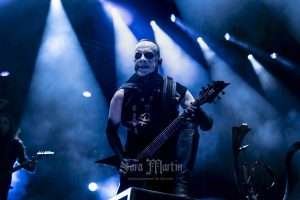
The fact that Celestial Bloodlust was also part of the live set in Barcelona makes the song particularly interesting when heard again away from the stage. At Razzmatazz 3, the physical impact of the track was obvious, but the studio version reveals just how much of that force comes from composition rather than volume. The song does not need a moshpit to be violent. It does not need a wall of speakers or a crowded room to communicate its aggression. The recording itself contains enough tension to make the listener feel as though something is constantly about to break through the surface.
That connection with the Barcelona concert also changes the way I hear the EP. Seeing Blackbraid live before spending more time with this release makes it easier to understand why these songs work so well as part of the project’s broader universe. On stage, Celestial Bloodlust belonged naturally alongside material from the three main albums, but its darker character was already noticeable. The song seemed to drag the atmosphere of the room downwards before the band could release it again. Hearing Nocturnal Womb afterwards gives that impression a context: these songs were never supposed to be the bright centre of the story. They were the shadows underneath it.
And then, just when the EP seems determined to leave us there, Barefoot Ghost Dance on Blood Soaked Soil (Acoustic) arrives.
The original Barefoot Ghost Dance on Blood Soaked Soil has become one of the most recognisable compositions in the Blackbraid catalogue, and transforming it into an acoustic instrumental is a surprisingly effective way of closing this particular chapter. Instead of attempting to reproduce the emotional weight of the original arrangement, the acoustic version strips away the distortion and allows the melody to exist almost by itself. After the aggression of the first two tracks, the effect is not one of relief so much as aftermath. The blood has dried, the noise has disappeared and what remains is the memory of what happened.
This final piece is also what prevents Nocturnal Womb from becoming simply a collection of two rejected songs and an acoustic bonus. There is an actual narrative relationship between the three compositions. Nocturnal Womb descends into darkness, Celestial Bloodlust intensifies it and Barefoot Ghost Dance on Blood Soaked Soil (Acoustic) emerges from the other side. There is no need for a dramatic conclusion because the acoustic arrangement provides something much more subtle: silence after violence. It is almost possible to imagine the record beginning again immediately afterwards, with the same forest waiting patiently in the darkness.
There is a temptation when discussing Blackbraid to spend more time explaining the project’s cultural identity than discussing the music itself. That is understandable, because its indigenous perspective is an important part of what distinguishes Blackbraid from the overwhelming majority of contemporary black-metal projects. But Nocturnal Womb is a useful reminder that identity cannot replace composition. Whatever your knowledge of the mythology surrounding the project, these songs still have to work as music, and fortunately they do. The riffs are memorable, the dynamics are carefully controlled and the atmosphere is sufficiently distinctive to prevent the EP from becoming another anonymous exercise in atmospheric black metal.
What I find most appealing is that Blackbraid did not appear to feel the need to make these songs more accessible simply because Blackbraid III had become such an ambitious record. Instead, they allowed them to remain uncomfortable. There is a certain confidence in recognising that not every good song needs to belong to the same narrative, and perhaps even more confidence in giving those songs their own release rather than presenting them as an expanded edition of the album. The decision makes Nocturnal Womb feel deliberate rather than supplementary.
It is also worth remembering that this is still a remarkably young project. Blackbraid released its debut only in 2022, followed by Blackbraid II in 2023 and Blackbraid III in 2025. In a very short period of time, Sgah’gahsowáh has established a recognisable musical language and then demonstrated that he is already willing to step outside it. The trilogy may have its own internal logic, but Nocturnal Womb suggests that the future of Blackbraid does not necessarily have to be dictated by that structure. The project can move sideways as well as forward.
And perhaps that is ultimately what makes this little release more important than its modest format suggests. It is not a new chapter in the trilogy. It is something growing underneath it. The title Nocturnal Womb is almost too perfect in that sense: a hidden place in which something is developing away from the light, something that may eventually emerge in a different form. Whether that becomes the direction of the next Blackbraid record is impossible to know, and frankly, I would rather not know yet. The uncertainty is part of the appeal.
After the final acoustic notes disappear, the EP leaves behind a strangely empty feeling. There has been no grand finale, no monumental climax and no attempt to convince us that we have just witnessed the next evolution of black metal. Instead, there are three pieces of music that occupy a narrow but remarkably effective space between the albums. Two of them are among the darkest things Blackbraid have released; the third quietly reminds us that darkness and beauty have never been mutually exclusive within this project.
Perhaps Nocturnal Womb was never meant to be a major statement. Perhaps it was simply the place where two songs that refused to belong elsewhere could finally exist. But sometimes those are the releases that tell us the most about a band. They reveal what happens when there is no larger narrative to serve, no album sequence to complete and no expectation to satisfy. Blackbraid sound less concerned with conquering the landscape here than with disappearing into it.
And somewhere in that darkness, beneath the trees and beyond the reach of the light, something is still moving.